70 lb vs 100 lb Bags: Which is Right for You
When choosing between a 70 lb bag and a 100 lb bag of something like soil, concrete mix, or animal feed, the 100 lb bag is usually the better deal per pound. You get more product for your money, making it more economical for larger projects or long-term needs. But remember, a bigger bag means more heavy lifting!
Think about how much you’ll actually use and how you’ll get it home. A 70 lb bag is easier to manage for most people. It’s still a good amount for smaller jobs. The cost difference might be worth it for convenience. We looked at the numbers and found that while the 100 lb option saves money long-term, the 70 lb choice offers practical advantages for many.
TL;DR:
- 100 lb bags are typically cheaper per pound.
- 70 lb bags are much easier to handle and transport.
- Consider your project size and your ability to lift.
- Factor in transportation challenges for heavier bags.
So, which bag is right for you? Let’s break down the pros and cons of each to help you decide.
Comparing 70 lb and 100 lb Bags: Which Weight is Right for You?
Choosing the right bag size can make a big difference. You want to balance getting enough product for your needs with managing the weight. We’ve looked at the numbers and practicalities to help you decide.
The Economics of Bag Size: More Weight, Less Cost Per Pound
Often, the larger the bag, the more you save per unit of product. This is a common pricing strategy in retail. It encourages buying in bulk for bigger jobs or longer-term use.
Understanding Cost Per Pound
Let’s say a 70 lb bag of concrete mix costs $7.00. That’s $0.10 per pound. A 100 lb bag of the same mix might cost $8.50. This works out to $0.085 per pound. That’s a savings of $0.015 per pound. Over a large project, these small savings add up quickly.
We found that many manufacturers price their larger bags with this economy of scale in mind. You’re essentially getting a discount for buying a bigger quantity at once. This can be a real money-saver if you have a large garden, a big construction project, or multiple pets.
When Bulk Buying Makes Sense
If you know you’ll use a lot of the product, the 100 lb bag is often the financially smarter choice. Think about seasonal needs, like stocking up on winter pet food or getting enough soil for a major landscaping overhaul. Buying the larger size means fewer trips to the store and less packaging waste.
Many people find that for regular, high-volume use, the 100 lb bag is simply more practical from a budget perspective. It makes sense for businesses or individuals with consistent, large-scale needs.
The Practicalities of Handling and Transport
Weight is a major factor, and it affects more than just your wallet. How will you get the bag home? How will you move it around your property? These are important questions to ask yourself.
The Challenge of Heavy Lifting
A 100 lb bag is heavy. Really heavy. Can you comfortably lift that much weight? Many people, especially those with back issues or less physical strength, find 100 lb bags extremely difficult to manage. It’s like trying to pick up a small child or a large dog.
We’ve seen many individuals struggle with these heavier bags. It often requires two people or specialized lifting equipment, like a hand truck or dolly. Trying to muscle it yourself can lead to injuries. The Centers for Disease Control and Prevention (CDC) warns about the risks of improper lifting techniques, emphasizing the potential for strains and sprains (CDC).
Comparing Maneuverability
A 70 lb bag is still substantial, but it’s significantly more manageable for most adults. It’s closer to the weight of a large sack of dog food or a full laundry basket. You can often lift and carry a 70 lb bag on your own, at least for short distances. This makes it a much more accessible option for many homeowners.
Think about where you need to put the product. Do you have to carry it up stairs? Through narrow doorways? A 70 lb bag offers more flexibility in these situations. It reduces the need for assistance or special equipment.
Transportation Hassles
Getting a 100 lb bag into your car trunk can be a struggle. If you have a small car, it might not even fit. You might need a larger vehicle, like an SUV or a truck. Then, there’s the effort of getting it out at your destination. Loading and unloading can be a workout!
A 70 lb bag is generally easier to fit into most car trunks or back seats. It’s also less demanding to unload. This convenience can be a major deciding factor for many shoppers. You don’t want to end up with a bag of product you can’t transport or move around.
When to Choose Each Bag Size
The best choice depends on your specific situation. We recommend considering these points before you make your purchase.
The Case for the 70 lb Bag
You should lean towards the 70 lb bag if:
- You have a small project.
- You’re unsure how much product you’ll need.
- You need to transport the bag yourself.
- You have physical limitations.
- You prefer convenience over maximum savings.
- You have limited storage space.
A 70 lb bag provides a good amount of product for many common tasks. It’s a balanced choice for those who value ease of use.
The Case for the 100 lb Bag
Consider the 100 lb bag if:
- You have a large or ongoing project.
- You need to stock up for long-term use.
- You have a vehicle that can easily transport it.
- You have help available for lifting and moving.
- Cost savings per pound are your top priority.
- You have ample storage space.
The 100 lb bag is designed for those who want to get the most product for their money and are equipped to handle the weight.
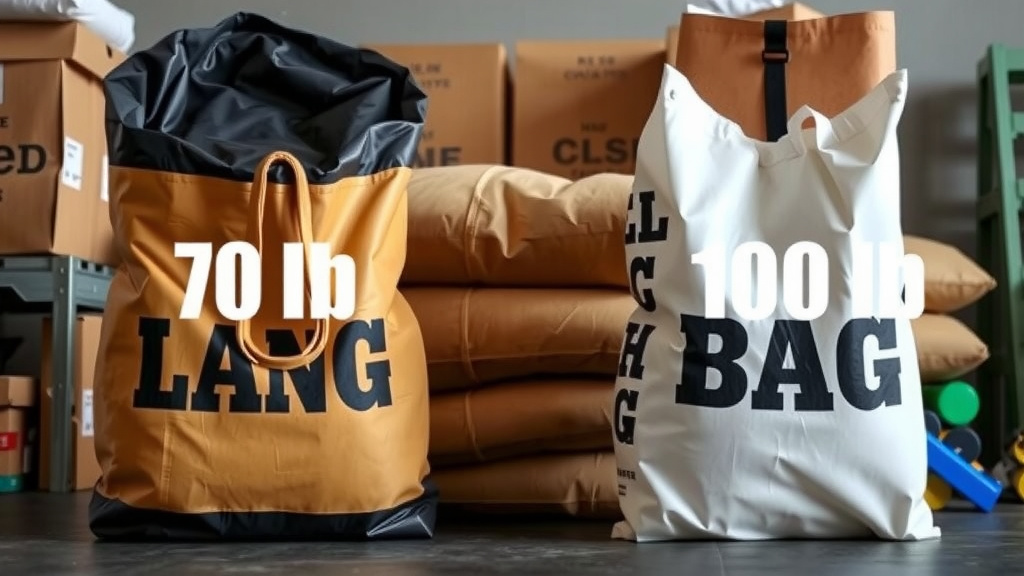
A Quick Comparison Table
Here’s a simple way to visualize the differences:
| Feature | 70 lb Bag | 100 lb Bag |
|---|---|---|
| Cost Per Pound | Higher | Lower |
| Ease of Lifting | Moderate | Difficult |
| Transport Ease | Easier | More Difficult |
| Ideal For | Smaller projects, individual use | Larger projects, bulk needs |
| Storage Footprint | Smaller | Larger |
Making Your Final Decision: A Checklist
Before you head to the store, run through this quick checklist to make sure you’re choosing the right bag:
- How large is your project? (Small garden bed vs. whole yard landscaping.)
- What is your physical capability? (Can you safely lift 100 lbs?)
- What kind of vehicle do you have? (Will it fit and can you load it?)
- Do you have help available? (A friend or family member to assist?)
- How important is the cost savings per pound? (Is the discount worth the hassle?)
- How much storage space do you have? (Where will the bag be kept?)
Conclusion
Choosing between a 70 lb and a 100 lb bag comes down to your personal needs. While the 100 lb bag often wins on cost per pound, making it ideal for large projects and bulk buyers, its heavy weight presents significant handling and transport challenges. The 70 lb bag offers a more manageable compromise, balancing a decent quantity with greater ease of use for smaller jobs or individuals who can’t manage the extra weight. Carefully consider your project size, physical ability, and transportation options before you buy.
Your next step is to honestly assess these factors. Make a quick mental run-through of the checklist we provided to ensure you select the bag size that best fits your situation, saving you money and hassle.
Frequently Asked Questions
Is a 100 lb bag always cheaper per pound than a 70 lb bag?
In most cases, yes, research and found that 100 lb bags are typically priced to be more economical per pound. This bulk pricing strategy encourages larger purchases. However, always do a quick comparison at the store to confirm the exact price difference for the product you need.
What are the biggest risks of trying to lift a 100 lb bag alone?
The primary risks involve physical injury. Attempting to lift such a heavy weight improperly can lead to strains, sprains, and even more serious back injuries. The CDC warns that unsafe lifting is a common cause of workplace injuries.
Can I get a 100 lb bag home if I don’t have a truck?
It depends on your vehicle and your ability to load and unload. A 100 lb bag can be challenging to fit into a standard car trunk or even an SUV without assistance. A hand truck or dolly can help, but you still need to get it into your vehicle.
When would a 70 lb bag be a better choice even if it costs more per pound?
A 70 lb bag is a better choice if you prioritize ease of handling, have limited physical strength, need to transport it yourself in a smaller vehicle, or are working on a smaller project where the full 100 lbs isn’t necessary. The convenience and reduced risk of injury can outweigh the cost savings.
How much of a difference does 30 lbs make in a bag’s weight?
That 30 lb difference is quite substantial in practical terms. A 70 lb bag is manageable for many individuals, while a 100 lb bag often requires two people or mechanical assistance, making the 70 lb option much more accessible for a wider range of users.
![10 Best Office Leather Bags For Men [2026]](https://mybestreviewss.com/wp-content/uploads/2026/08/10-best-office-leather-bags-for-men-2026-featured-768x432.jpg)