Angle Bag vs Heavy Bag: Which Training Tool Is Best
When choosing between an angle bag and a heavy bag for your training, the angle bag offers more versatility for specific techniques. While both are excellent for striking practice, an angle bag excels at helping you develop uppercuts, hooks, and body shots by mimicking targets at different angles. A heavy bag is a great all-rounder for power and endurance. We found that for a well-rounded striking game, you’ll likely want to incorporate both.
Think of the heavy bag as your primary sparring partner for building power and stamina. It’s great for practicing straight punches and combinations. The angle bag, on the other hand, is more like a specialized coach, helping you refine those killer uppercuts and sneaky body shots that can catch an opponent off guard. Many fighters use them together to build a complete arsenal.
- Heavy bag is best for power and general striking.
- Angle bag is ideal for uppercuts, hooks, and body shots.
- Angle bags can also help with defensive movement.
- Many serious trainers use both for complete development.
Let’s break down the key differences and how each bag can help you reach your training goals.
Choosing Your Striking Partner: Angle Bag vs. Heavy Bag
Deciding between an angle bag and a heavy bag can feel like a big choice for your training space. Both bags are fantastic tools. We found they each serve unique purposes in developing your striking skills. Think of them as different kinds of practice partners, each teaching you something new.
The Heavy Bag: Your Power and Endurance Foundation
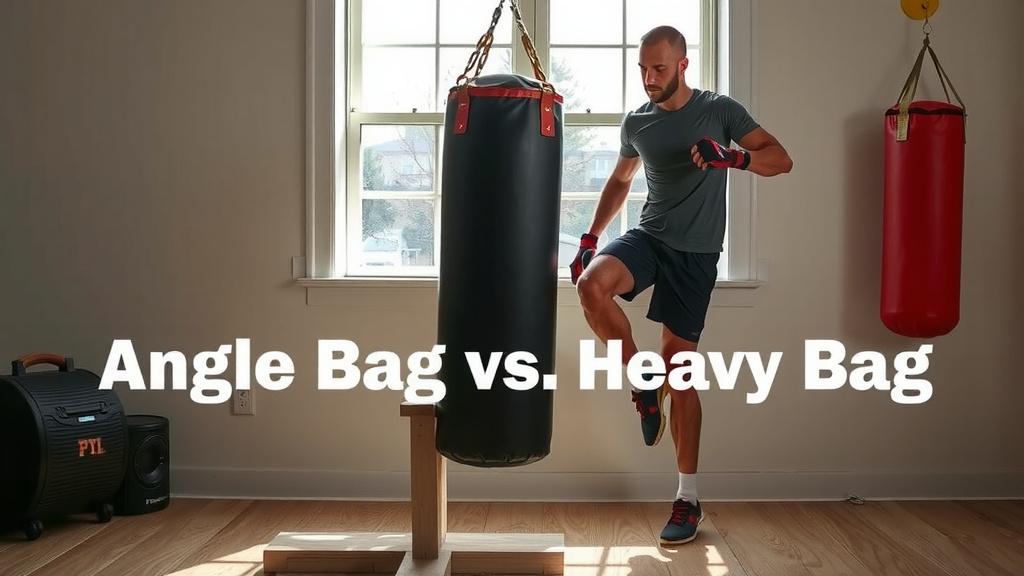
The heavy bag is often the first thing people think of when they imagine boxing or martial arts training. It’s a classic for a reason. You can hit it with all your might and it usually just stands there, ready for more. This makes it ideal for building raw power and stamina.
What the Heavy Bag Does Best
When you step up to a heavy bag, you’re ready to put in the work. You can throw straight punches, like jabs and crosses, with full force. It’s also great for practicing longer combinations, moving from one punch to the next smoothly. Because it absorbs a lot of impact, it really helps you develop the strength and endurance to keep going round after round. We found it’s perfect for those moments when you just need to let loose and build that physical conditioning.
Developing Power and Speed
Hitting a heavy bag teaches your body to generate force. The resistance it provides means you have to work harder with every punch. This constant effort builds muscle memory for powerful strikes. You can also work on speed by throwing fast combinations. The key is to vary your pace and intensity. Many trainers recommend using a heavy bag for at least 60% of your striking practice.
Building Stamina and Conditioning
Longer rounds on the heavy bag are excellent for cardiovascular health. Imagine it as a tireless opponent. You can train for three-minute rounds with a minute rest, just like in a fight. This type of training builds your ability to maintain intensity when you get tired. We found that consistent work on a heavy bag really translates to better stamina in any physical activity.
The Angle Bag: Refining Technique and Precision
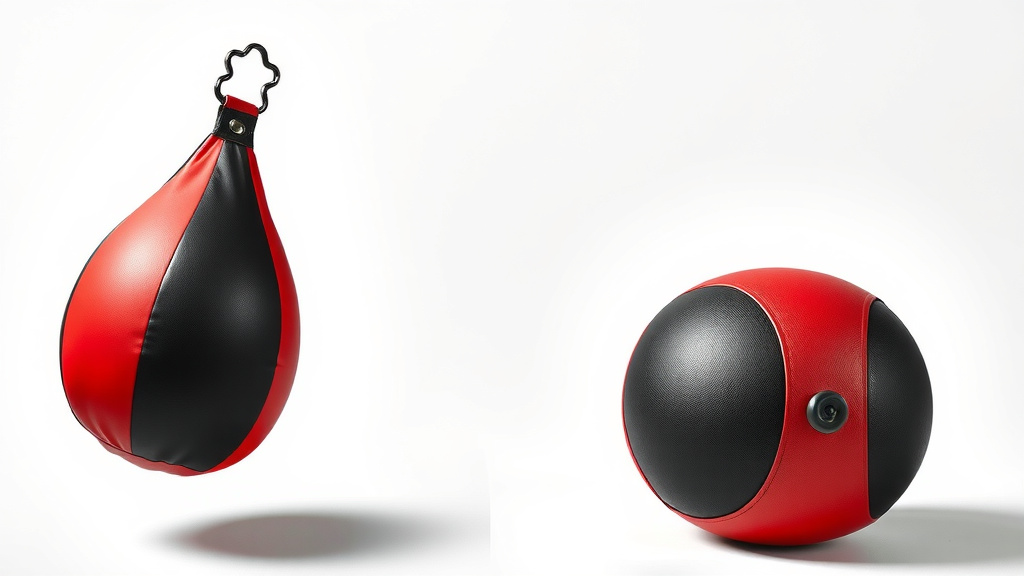
Now, let’s talk about the angle bag. This bag looks a bit different, often smaller and sometimes hanging in a way that allows it to swing more freely. Its unique shape and hanging mechanism create opportunities for more specific types of training that a standard heavy bag just can’t replicate.
Targeting Specific Strikes
The real magic of the angle bag lies in its ability to mimic targets at different heights and angles. This is where you get to really focus on those crucial uppercuts and hooks. Because the bag might swing or shift, you learn to adjust your angles and timing. We found this is invaluable for developing accuracy with shots that go upwards or around an opponent’s guard.
Mastering Uppercuts
Uppercuts are essential for getting under an opponent’s defense. The angle bag is perfect for practicing these because you can hang it lower or hit it on its upward swing. This forces you to use the right body mechanics to drive the punch upwards. Many boxers and martial artists use angle bags specifically to hone this powerful strike. We found that consistent practice leads to a much more reliable uppercut.
Sharpening Hooks and Body Shots
Hooks, whether to the head or body, require precise rotation and timing. An angle bag can help you practice these by presenting targets that aren’t straight on. You can work on throwing side punches with power and accuracy. Similarly, body shots are a vital part of any striking game, and the angle bag can be positioned or utilized to make those targets more realistic and dynamic.
Improving Defensive Movement and Footwork
While not its primary function, the angle bag can indirectly help with defense. Because it often swings more than a heavy bag, you learn to move around it. This can translate into better footwork and evasion skills. You practice not just hitting, but also positioning yourself correctly to land shots and avoid counter-attacks. We found that even small movements around the bag can improve your overall agility.
Angle Bag vs. Heavy Bag: A Direct Comparison
To help you see the differences clearly, let’s put them side-by-side. Both are great, but they help you train in distinct ways. Understanding these differences will help you decide which one, or maybe both, is right for your training regimen.
| Feature | Heavy Bag | Angle Bag |
|---|---|---|
| Primary Use | Power, Endurance, General Striking | Specific Techniques (Uppercuts, Hooks), Accuracy |
| Movement | Minimal swing, absorbs impact | More swing, reactive |
| Best For | Developing raw power, stamina, basic combinations | Refining uppercuts, hooks, body shots, defensive angles |
| Space Needed | Often larger and requires stable mounting | Can be more compact, varied mounting options |
| Training Focus | Overall conditioning and strength | Technical precision and targeted skill development |
When to Choose Which Bag
Your choice depends on what you want to achieve. If you’re just starting out and want to build a solid base of power and endurance, a heavy bag is likely your go-to. It’s forgiving and lets you unleash energy. If you’ve been training for a while and want to add more sophisticated strikes to your arsenal, or if you want to improve your accuracy with specific punches, the angle bag becomes very appealing.
For Building Raw Power and Stamina
If your main goal is to increase your physical conditioning, build muscle, and improve your lung capacity, the heavy bag is your best friend. You can spend hours with it, working on your cardio and strength. We found that it’s an excellent tool for anyone looking to get in shape while learning to strike.
For Sharpening Specific Techniques
On the other hand, if you’re looking to become a more technically proficient striker, the angle bag shines. It’s about quality over quantity for certain shots. You’ll be focusing on making each uppercut, hook, or body shot as effective as possible. This kind of targeted practice can make a big difference in your overall effectiveness.
Maximizing Your Training with Both Bags
Many seasoned athletes and trainers don’t just pick one. They use both! This approach gives you the best of both worlds. You get the power and endurance training from the heavy bag, and the technical refinement from the angle bag. This balanced approach can lead to a more complete and well-rounded striking ability.
A Balanced Training Regimen
Incorporating both bags into your routine can create a powerful training synergy. You might start your session with some heavy bag work to warm up and build power, then move to the angle bag to focus on technique. Or, you could use the heavy bag for conditioning rounds and the angle bag for specific skill drills. We found that this variety keeps training interesting and targets different aspects of your performance.
Your Next Steps in Training
So, what does this mean for your training? It means you have options! Both bags are excellent additions to any home gym or training facility. Consider your current skill level and your training goals. Do you need to build more power and stamina? Or are you looking to perfect those tricky uppercuts and hooks?
Here’s a quick checklist to help you decide:
- Do you want to build overall strength and endurance?
- Are you focusing on developing powerful straight punches?
- Is improving your cardio a top priority?
- Do you want to practice uppercuts and hooks specifically?
- Are you looking to refine your body shot accuracy?
- Would training your footwork around a moving target be beneficial?
Answering these questions can point you toward the bag that will serve you best right now. Remember, the best training tool is the one you’ll actually use consistently.
Conclusion
As you can see, both the angle bag and the heavy bag offer distinct advantages for your training. The heavy bag is your steadfast partner for building raw power, stamina, and overall conditioning. It’s perfect for those days when you need to hit hard and build endurance. The angle bag, however, is your precision coach, ideal for refining uppercuts, hooks, and body shots, making your technique sharper. We’ve found that for a truly well-rounded striking game, incorporating both into your routine provides the best of both worlds. Your next step is to consider your current training goals and decide which bag, or perhaps both, will best help you achieve them.
Frequently Asked Questions
Can I get a good workout using just an angle bag?
Yes, you can definitely get a great workout with an angle bag. It’s excellent for improving your speed, accuracy, and technique for specific punches like uppercuts and hooks. While it might not build the same level of raw power or endurance as a heavy bag, it offers a more dynamic and precise training session.
Is a heavy bag better for beginners?
Generally, yes. A heavy bag is more forgiving and allows beginners to focus on developing basic punching power, form, and stamina without needing highly precise timing. You can hit it hard and learn combinations, which is a great starting point for any striking discipline.
How often should I use an angle bag compared to a heavy bag?
The frequency depends on your goals. If you’re focused on power and conditioning, spend more time on the heavy bag. If you’re looking to refine specific techniques like uppercuts and hooks, the angle bag deserves more attention. Many trainers recommend a balanced approach, perhaps using the heavy bag for warm-ups and power rounds, and the angle bag for technique drills.
Do I need a lot of space for an angle bag?
Angle bags come in various sizes and mounting options. Some are quite compact and might require less space than a large, stationary heavy bag. You’ll still need enough room to move around it freely and strike effectively, but they can often be a more space-efficient option for home gyms.
Will using both bags make me a better fighter?
Absolutely. Training with both a heavy bag and an angle bag provides a comprehensive approach to striking development. You build the power and endurance foundation with the heavy bag, and then refine the precision and tactical application of your strikes with the angle bag. This combination helps create a more complete and effective striker.
![10 Best Diaper Bags Leather [2026]](https://mybestreviewss.com/wp-content/uploads/2026/09/10-best-diaper-bags-leather-2026-featured-768x432.jpg)