
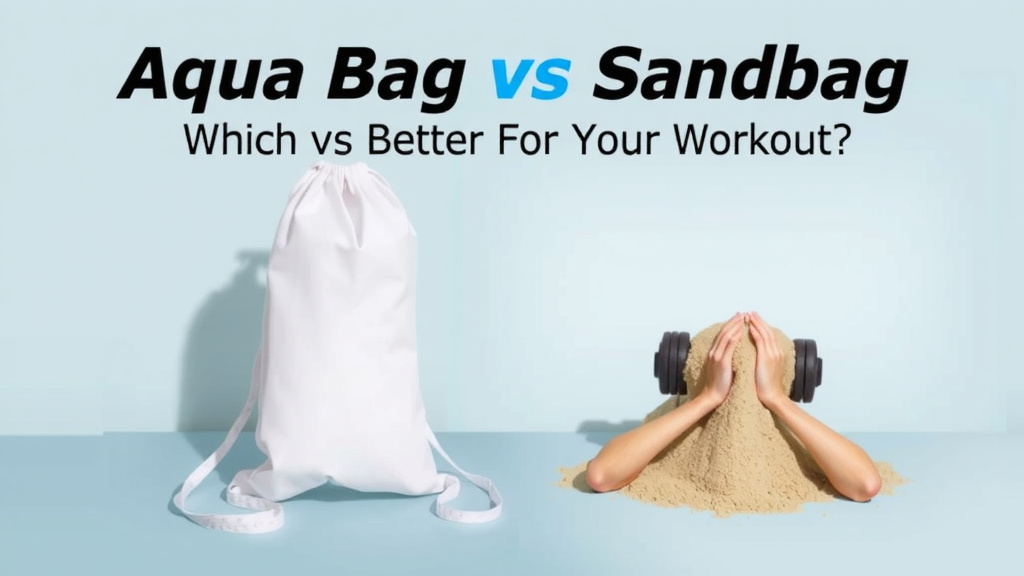
Aqua Bag vs Sandbag: Which Is Better For Your Workout
When choosing between an aqua bag and a sandbag for your workouts, the key difference comes down to the instability and challenge. Aqua bags offer a more dynamic and unpredictable resistance because the water shifts freely, forcing your stabilizing muscles to work harder. Sandbags provide a more consistent, yet still challenging, load with their own unique give and take.
Both training tools are fantastic for building functional strength and power. They mimic real-world lifting and carrying motions, which can translate to better performance in sports and daily activities. While they share similarities in their functional training benefits, their unique resistance profiles make them suitable for slightly different training goals and preferences.
- Aqua bags offer dynamic, shifting resistance.
- Sandbags provide a more consistent, yet unstable, load.
- Both build functional strength and core stability.
- Aqua bags challenge stabilizing muscles more intensely.
- Sandbags offer a unique, forgiving resistance.
Let’s dive into what makes each of these fitness tools unique and how you can decide which one is the best fit for your training needs.
Comparing Water Bags and Sandbags for Functional Training
When you’re looking to spice up your workouts, both aqua bags and sandbags are excellent choices. They both offer a unique challenge that traditional weights often can’t match. Think of them as your training partners for building a strong, resilient body. We found that understanding their core differences will help you pick the right one for your goals.
How Water Bags Work Their Magic
Aqua bags are essentially durable bags filled with water. The real magic happens when you move. Because water isn’t fixed, it sloshes and shifts unpredictably with every movement. This forces your core and stabilizing muscles to constantly adjust. It’s like trying to balance a jiggly Jell-O mold while doing squats!
This constant micro-adjustment is what makes aqua bags so effective. Your body has to work overtime just to stay upright. We found this is fantastic for improving balance and proprioception. Proprioception is your body’s ability to sense where it is in space. So, you’re not just getting stronger; you’re getting more coordinated.
The Shifting Resistance Effect
The water inside moves freely, creating a dynamic load. Imagine doing a press. As you push up, the water shifts, making the lift harder at different points. This means your muscles are engaged through the entire range of motion. It’s a challenge that changes with you.
What Kind of Movements Can You Do?
You can do almost anything with an aqua bag! Think of exercises like squats, lunges, carries, and presses. You can also do rotational movements like chops and twists. The unpredictable nature of the water makes even simple exercises feel new and demanding. Many fitness professionals agree this unpredictability is a huge benefit.
The Unique Appeal of Sandbags
Sandbags offer a different, yet equally effective, training experience. They are typically made of sturdy canvas or vinyl and filled with sand. Unlike the free-flowing water, the sand settles and shifts, but it does so with more resistance than water. It feels more like carrying a lumpy, awkward object.
This unique feeling is what many athletes and coaches love. It mimics carrying heavy, irregularly shaped objects in the real world. This type of training is often called functional strength training. It directly translates to better performance in sports and everyday tasks. We found that sandbags provide a grounding, gritty feel to your workout.
Understanding Sand’s Resistance
The sand inside can be moved around. You can adjust the fill levels to change the weight and how it shifts. When you lift a sandbag, the sand might move, creating instability. But it’s a more contained instability compared to water. This gives you a solid, yet challenging, load. It’s a forceful, grounded resistance.
Versatile Sandbag Exercises
Sandbags are perfect for a variety of exercises. You can perform cleans, squats, presses, and carries. Their shape makes them great for dragging and rolling movements too. Think about tackling a farmer’s walk with a sandbag – it’s a whole different beast compared to dumbbells. This variety keeps your training fresh.
Aqua Bag vs. Sandbag: Direct Comparison
Let’s break down the key differences side-by-side. Both are fantastic tools, but they excel in slightly different areas. Deciding between them often comes down to your personal preference and training goals.
The Core Stability Challenge
Aqua bags are often considered the king of core engagement. Because the water is so fluid, your stabilizing muscles work non-stop to keep you balanced. This can lead to quicker gains in core strength. Many physical therapists recommend unstable loads for rehabilitation.
Sandbags also demand a lot from your core, but in a slightly different way. The shifting sand requires constant micro-adjustments, but it’s not as fluid as water. You might find that sandbags build a more dense, connected core strength. It’s about controlling that lumpy, heavy mass.
Injury Prevention and Rehabilitation
Both can be excellent for injury prevention and rehab when used correctly. The instability of both tools can help strengthen smaller muscles often overlooked in traditional training. Aqua bags, with their extreme fluidity, can be particularly useful for improving balance and preventing falls. We found that controlled use of unstable loads can improve joint stability.
Sandbags can help build resilience. Their awkward nature teaches your body to move efficiently and safely with imperfect loads. This can prepare you for unexpected situations or heavy lifting tasks. Research from biomechanics suggests that training with varied resistance improves motor control (NCBI).
Ease of Use and Portability
When it comes to portability, sandbags often have an edge, especially when empty. You can empty them out and transport them more easily. Filling them up can be a bit messy, though, as sand can spill. Many experts suggest using smaller filler bags inside for easier handling.
Aqua bags are generally easier to fill with just water. However, they can be quite heavy and bulky even when partially filled. Transporting a full aqua bag can be challenging. They are best used where you plan to train. We found that emptying them completely for transport can still be cumbersome due to the bag’s material.
Durability and Maintenance
Both types of bags are designed for tough workouts. Aqua bags are usually made of thick PVC or similar materials. You need to be careful not to overfill them or expose them to sharp objects. Checking for leaks is a good habit.
Sandbags, typically made of heavy-duty canvas, are very robust. They can handle dragging, dropping, and rough treatment. The main maintenance is ensuring the sand doesn’t get damp and clump up. Keeping them dry is key for longevity.
The Feel and Feedback
What does it feel like to train with each? Aqua bags offer a fluid, almost liquid resistance. It’s a constant, gentle push and pull. You feel the water moving, and your body reacts.
Sandbags provide a more gritty, solid feel. The sand shifts and settles, giving you tactile feedback. It feels more like wrestling with a heavy, unpredictable object. Some people describe it as more “real-world” resistance.
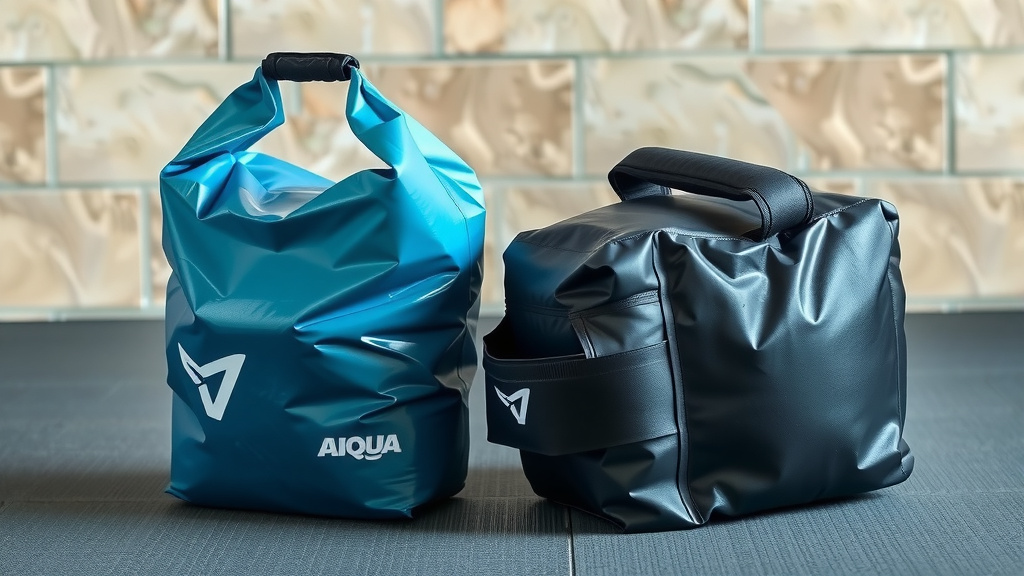
Making Your Choice: What’s Right for You?
So, how do you decide? Consider what you want to achieve with your training. Do you want to dramatically improve your balance and core stability? An aqua bag might be your best bet. Are you training for sports that involve lifting and carrying awkward objects? A sandbag could be more beneficial.
Who Should Choose an Aqua Bag?
- Athletes focused on improving balance and coordination.
- Individuals looking for an intense core workout.
- Those who enjoy dynamic, constantly changing resistance.
- People recovering from certain injuries who need controlled instability.
Who Should Choose a Sandbag?
- Anyone wanting to build functional strength for sports or daily life.
- Trainees who prefer a more grounded, physical challenge.
- Individuals who need to simulate carrying or lifting heavy, irregular objects.
- People who value versatility for a wide range of strength and conditioning exercises.
Your Training Checklist
To help you decide, ask yourself these questions:
- What is my primary fitness goal?
- How much space do I have for training?
- What is my budget for workout equipment?
- Do I prefer fluid or more grounded resistance?
- How important is portability for my training?
- Am I looking for a very specific type of instability?
| Feature | Aqua Bag | Sandbag |
|---|---|---|
| Resistance Type | Fluid, highly dynamic, constantly shifting | Dense, shifting, yet more grounded |
| Core & Stability | Very high demand due to constant water movement | High demand, focused on controlling mass |
| Functional Carry Mimicry | Moderate | High (mimics awkward objects) |
| Portability (Empty) | Moderate (bulky) | High (can be fully emptied) |
| Filling/Draining | Easy with water, but can be heavy | Can be messy with sand, easier to adjust weight |
| Common Exercises | Presses, carries, lunges, twists | Cleans, squats, carries, drags, slams |
Conclusion
You’ve learned that both aqua bags and sandbags offer fantastic ways to build functional strength. Aqua bags provide a highly dynamic, fluid challenge that really pushes your stabilizing muscles. Sandbags offer a more grounded, yet still unpredictable, resistance, perfect for mimicking real-world lifts. Your choice depends on your goals: focus on intense core and balance with aqua bags, or build gritty, real-world strength with sandbags. Now, pick the one that best fits your training style and get ready to feel stronger and more coordinated!
Frequently Asked Questions
Can I use an aqua bag for rehabilitation?
Yes, aqua bags can be excellent for rehabilitation when used correctly. Their fluid nature forces constant micro-adjustments, which can help rebuild balance and strengthen smaller supporting muscles. Always consult with a physical therapist before starting any new exercise program for rehab.
Is a sandbag better for grip strength?
Sandbags can be very effective for building grip strength. The unstable, shifting nature of the sand requires your hands and forearms to work harder to maintain control. This can translate to better grip in everyday activities and sports.
How do I prevent my sandbag from getting moldy?
To prevent mold, always store your sandbag in a dry, well-ventilated area. If it gets wet, empty it out and let it dry completely before storing. Using smaller, sealed filler bags inside can also help contain moisture.
Are aqua bags noisy during workouts?
Aqua bags are generally quiet during workouts. The water inside moves smoothly, creating a gentle sloshing sound. This makes them a great option if you’re working out in an environment where noise is a concern.
Which bag is easier to travel with?
Sandbags are usually easier to travel with because you can completely empty them of sand. While filling them up can be messy, an empty sandbag is lighter and more compact than an empty aqua bag. Aqua bags, even when partially drained, can be quite bulky.



![10 Best Leather Pilot Bag [2026]](https://mybestreviewss.com/wp-content/uploads/2026/08/10-best-leather-pilot-bag-2026-featured-768x432.jpg)