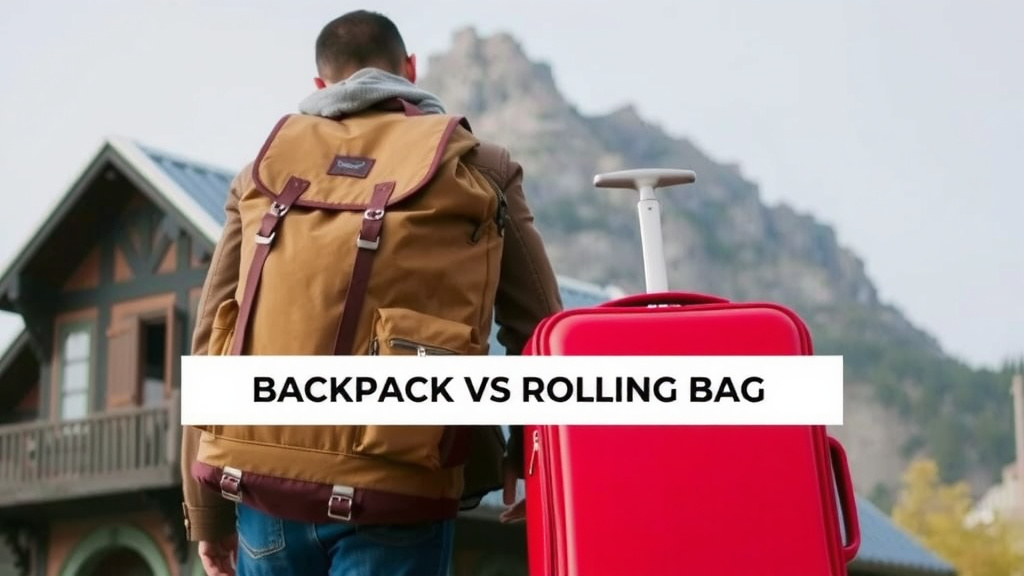
Backpack vs Rolling Bag: Which Travel Choice Is Best
When deciding between a backpack vs rolling bag for your travels, the best choice really depends on your travel style. A rolling bag is generally better for smooth surfaces and lighter loads, while a backpack shines when you need mobility and comfort over uneven terrain.
Think about where you’ll be going. Cobblestone streets and crowded airports can be tough on wheeled luggage. If you plan on hiking or navigating lots of stairs, a backpack is likely your best friend. We found that your trip’s destination plays a big part in this decision. Packing light is also key for either option.
- Rolling Bags: Great for airports, smooth sidewalks, and heavy loads you don’t want to carry.
- Backpacks: Ideal for rough terrain, stairs, and when you need hands free.
- Consider your trip’s destination and activities.
- Pack what you need, but try to avoid overpacking.
Let’s break down the pros and cons of each to help you make the perfect choice for your next adventure.
Choosing between a backpack and a rolling bag can feel like a big decision for any traveler. Both have their own strengths and weaknesses. We’ve looked into what makes each one a good fit for different types of trips. Let’s dive into the details to help you figure out which one is your perfect travel companion.
Wheeled Luggage: Your Smooth Operator
Rolling bags, often called suitcases or rollers, are designed for ease of movement on flat surfaces. They typically come with two or four wheels and a retractable handle.
The Advantages of Rolling Bags
One of the biggest pluses is weight distribution. When you roll your bag, you’re not carrying its full weight. This is a huge relief, especially when you have a lot to pack. Many travelers find this makes navigating airports and train stations much less tiring.
Rolling bags also tend to offer more organized packing space. You can often lay out clothes flat, reducing wrinkles. Many have separate compartments, making it easier to find what you need without rummaging through everything.
When Rolling Bags Shine
These bags are your best bet for trips involving a lot of time on smooth, paved surfaces. Think city breaks, business trips, or vacations where you’ll mostly be in hotels and using taxis or ride-shares. Research shows they are ideal for transporting heavier items like electronics or formal wear without strain (Consumer Reports).
If you’re not particularly concerned about carrying your luggage, a rolling bag can be a fantastic choice. It’s all about making your journey as comfortable as possible.
The Downsides of Rolling Bags
The main challenge with rolling bags is their inability to handle rough terrain. Cobblestone streets, gravel paths, or even just cracked sidewalks can make them difficult to pull. You might find yourself tilting the bag and dragging it, which is hard on the wheels and your arm.
Navigating stairs is another major hurdle. You’ll likely have to pick up the entire weight of the bag. This can be a real struggle, especially if you have multiple flights of stairs to climb.
Backpacks: The Adventurer’s Ally
Travel backpacks are designed to be worn on your back, distributing weight across your shoulders and hips. They come in various sizes, from small daypacks to large expedition-style bags.
The Perks of Backpacks
Mobility is the backpack’s superpower. You can easily navigate stairs, uneven trails, and crowded spaces. If your travel plans involve a lot of moving around or exploring off the beaten path, a backpack is often the superior choice.
Many backpacks are designed with ergonomics in mind. Padded shoulder straps and hip belts can help distribute weight more evenly. This can make carrying even a heavier load more comfortable over longer distances, provided it’s packed correctly (National Outdoor Leadership School).
Where Backpacks Excel
These are perfect for backpacking trips, hostel stays, and any adventure where you might encounter stairs or uneven ground. They’re also excellent for multi-city trips where you’re frequently moving between different modes of transport. Many travelers find them ideal for keeping their hands free, which is handy for using maps or taking photos on the go.
For those who pack light and value agility, a backpack offers unmatched freedom. You can duck, weave, and climb with relative ease.
The Drawbacks of Backpacks
The main issue with backpacks is that you are carrying the full weight on your body. Even with good support, this can lead to fatigue, especially on long travel days or if the bag is overpacked. Shoulder and back strain are common complaints among backpack users (American Physical Therapy Association).
Organization can also be more challenging. While many backpacks have multiple compartments, accessing items at the bottom often means unpacking a good portion of the bag. They can also be a bit more difficult to pack neatly without creating a lumpy mess.
Comparing Key Features: A Quick Look
To make your decision even clearer, let’s compare some key aspects:
| Feature | Backpack | Rolling Bag |
|---|---|---|
| Terrain Handling | Excellent (stairs, trails, rough ground) | Poor (best on smooth surfaces) |
| Weight Carrying | Full weight on body (can be tiring) | Weight on wheels (easier to move) |
| Organization | Can be tricky, access difficult | Generally good, easy access |
| Hands-Free Use | Yes, hands are free | No, one hand needed to pull |
| Ideal For | Adventure, hostels, stairs, frequent movement | Airports, smooth sidewalks, hotels, light travel days |

Making the Right Choice for You
Consider your travel habits and destinations. If your trips are mostly urban with good infrastructure, a rolling bag might serve you well. If you envision yourself hiking to your accommodation or navigating bustling markets, a backpack will likely be a better fit.
Final Thoughts Before You Pack
Ultimately, both types of luggage have their place. Many experienced travelers actually own both and choose based on the specific trip. We found that packing light is a universal tip, regardless of your luggage choice.
Think about your upcoming adventures. Are you planning a city tour with smooth sidewalks, or a trek through varied landscapes? Your destination and planned activities are your best guides. Here’s a quick checklist to help you finalize your decision:
- Assess your typical travel destinations.
- Think about the terrain you’ll encounter.
- Consider how much you usually pack.
- Evaluate your physical comfort level with carrying weight.
- Will you need your hands free often?
- Is ease of access to items important during transit?
Conclusion
Choosing between a backpack and a rolling bag boils down to your travel style and destination. We found that rolling bags offer ease on smooth surfaces, perfect for city trips. Backpacks provide superior mobility and comfort over rough terrain, making them ideal for adventures. Remember, packing light is key for either choice. Consider your typical destinations and activities. Your best travel companion awaits your thoughtful decision.
Frequently Asked Questions
Which is better for international travel, a backpack or a rolling bag?
For international travel, think about your itinerary. If you’ll mainly stay in cities with good sidewalks and transport, a rolling bag can be more comfortable. However, if you anticipate navigating cobblestones, stairs, or using local transport frequently, a backpack will likely be more practical.
Can I use a backpack for business trips?
Yes, you can use a backpack for business trips, especially if you travel light and need to move quickly between locations. Look for sleek, professional designs with laptop compartments. Some modern rolling bags also come in stylish, business-appropriate designs.
What if I have a lot of heavy items to pack?
If you have many heavy items, a rolling bag generally distributes the weight better, making it easier to transport without straining your body. You can still pack heavier items in a backpack, but be mindful of proper weight distribution with hip belts and padded straps to avoid discomfort.
Are backpacks better for avoiding checked bag fees?
Backpacks are often designed to fit within airline carry-on size restrictions, which can help you avoid checked bag fees. Rolling bags can also be carry-on size, but larger ones might require checking. Always check your airline’s specific dimensions and weight limits.
Can I use both a backpack and a rolling bag on one trip?
Many travelers find success using both! You could use a rolling bag for your main luggage and a smaller backpack as a daypack or personal item for essentials. This offers the best of both worlds, providing convenience for transport and quick access to items.