
How to Get Paint Off a Leather Bag
Got paint on your favorite leather bag? Don’t panic! The simplest way to get paint off a leather bag is to act quickly and use a gentle cleaning solution. For water-based paints, a bit of mild soap and water can often do the trick. For tougher, oil-based paints, you might need a bit more, like rubbing alcohol, but always test in an inconspicuous spot first.
Leather is a beautiful material, but it can be delicate. You want to remove that accidental paint splatter without damaging the leather’s finish or color. Many people worry about making the problem worse, but with the right approach, you can often restore your bag to its former glory. We’ve researched various methods to help you out.
- For fresh paint, try wiping immediately.
- Mild soap and water work for latex paint.
- Rubbing alcohol can help with tougher paints.
- Always test cleaning solutions first.
- Condition your leather after cleaning.
Below, we’ll walk you through the best methods for safely removing paint from your leather bag, depending on the type of paint and your bag’s finish. Let’s get that bag looking like new again!
Safely Removing Paint Stains from Your Leather Bag
Accidental paint splatters on your favorite leather bag can feel like a mini-disaster. But don’t worry, you can often rescue your bag with a bit of care and the right approach. The key is to act fast and use gentle methods to avoid damaging the leather’s finish or color.
Understanding Your Leather Type Matters
Before you grab any cleaning product, it’s good to know what kind of leather your bag is made from. Different leather finishes react differently to cleaning agents. For instance, finished or protected leather is more forgiving than unfinished or delicate suede and nubuck.
Finished Leather: More Forgiving
This is the most common type of leather for bags. It has a protective coating, often called a finish, which makes it more resistant to stains and easier to clean. You’ll notice it feels smoother and might have a slight sheen.
Unfinished Leather: Handle with Care
Unfinished leathers like suede, nubuck, or aniline are more porous. They absorb liquids and stains more easily. Cleaning these requires a much gentler touch, and sometimes, professional help is best for tough stains.
First Steps: What to Do Immediately
The faster you address the paint, the easier it will be to remove. Fresh paint is much less likely to set into the leather’s pores.
For Wet Paint: Blot, Don’t Rub!
If the paint is still wet, your first instinct might be to wipe it. Instead, gently blot the paint with a clean, dry cloth or paper towel. This prevents smearing and pushing the paint deeper into the leather fibers.
For Dried Paint: Assess the Situation
Once paint has dried, it’s a bit more stubborn. You’ll need to choose a cleaning solution. We found that the type of paint dictates the best removal method.
Choosing Your Paint Removal Method
There are several ways to tackle paint on leather, ranging from simple household items to specialized cleaners. Always remember to test any product on a small, hidden area first – like the bottom of the bag or inside a flap – to ensure it doesn’t discolor or damage the leather.
Method 1: Mild Soap and Water (Best for Latex/Water-Based Paints)
This is your go-to for fresh, water-based paints like latex. It’s gentle and readily available.
- Mix a few drops of mild dish soap with warm water.
- Dampen a soft cloth with the solution. Wring it out well so it’s not dripping.
- Gently wipe the painted area. You might need to repeat this a few times.
- Use a clean, damp cloth (just water) to wipe away any soap residue.
- Pat the area dry with a clean, soft towel.
Many experts suggest this as the safest initial approach for water-based paints (Good Housekeeping Institute). It works by gently lifting the pigment without harsh chemicals.
Method 2: Rubbing Alcohol (For Tougher Paints)
Rubbing alcohol (isopropyl alcohol) can be very effective for dried paint, especially oil-based varieties. However, it can also dry out leather, so proceed with caution.
- Apply a small amount of rubbing alcohol to a cotton ball or swab.
- Gently dab the painted spot. Don’t saturate the leather.
- Work from the outside of the paint mark inward to avoid spreading it.
- As the paint lifts, switch to a clean part of the cotton ball.
- Once the paint is gone, wipe the area with a clean, damp cloth to remove alcohol residue.
- Dry the spot with a soft cloth.
Research indicates that alcohol can break down certain types of paint effectively. However, because it can strip natural oils from leather, it’s crucial to follow up with conditioning (American College of
Method 3: Specialized Leather Cleaners
If the paint is proving stubborn or you’re hesitant to use household products, a cleaner specifically designed for leather might be your best bet. These are formulated to be effective yet safe for various leather types.
- Follow the product’s instructions precisely.
- Most require applying a small amount to a cloth and gently working on the stain.
- Always perform a patch test first.
Method 4: Hairspray (Use as a Last Resort)
This is a trick that sometimes works, but it carries risks. Hairspray can sometimes dissolve certain types of paint, but it can also leave a sticky residue or damage the leather finish.
- Spray a small amount of aerosol hairspray onto a clean cloth, not directly onto the bag.
- Gently dab the paint.
- Wipe away any residue immediately with a clean, damp cloth.
- Dry thoroughly.
We found anecdotal evidence that this works for some individuals, but due to the potential for damage, it’s best to try other methods first. If you do try it, choose a non-oily, alcohol-based hairspray.
What About Suede or Nubuck?
Cleaning paint off these delicate materials is tricky. Harsh chemicals or excessive moisture can cause permanent damage. For suede and nubuck, we recommend using a specialized suede eraser or brush first. If that doesn’t work, consulting a professional leather cleaner is the safest route.
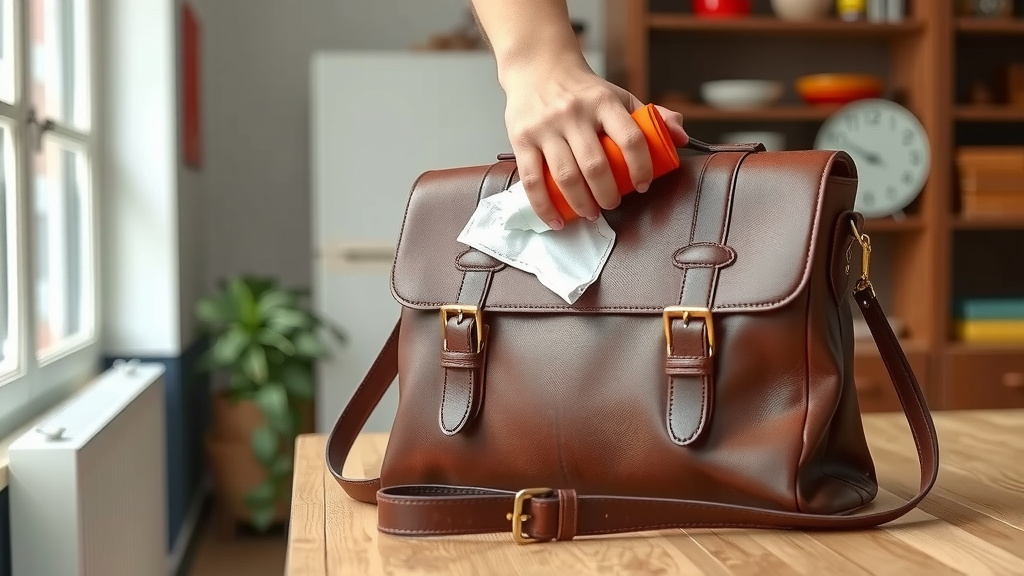
The Importance of Conditioning After Cleaning
No matter which method you use, cleaning can strip some of the natural oils from your leather. To keep your bag supple and prevent it from drying out or cracking, always follow up with a good quality leather conditioner.
- Apply a small amount of conditioner to a clean, soft cloth.
- Gently rub it into the cleaned area in a circular motion.
- Allow it to absorb for a few minutes.
- Buff off any excess with another clean cloth.
Conditioning restores moisture and protects the leather, keeping it looking its best. Many leather care guides recommend conditioning after any deep cleaning (Leather Industries of America).
Quick Checklist: Your Paint Removal Plan
Here’s a simple plan to guide you through the process:
- Act Fast: Blot wet paint immediately.
- Identify Paint Type: Water-based or oil-based?
- Patch Test First: Always test cleaners in a hidden spot.
- Choose Gentle Method: Start with soap and water, then try alcohol if needed.
- Be Gentle: Avoid harsh scrubbing.
- Condition Afterwards: Restore moisture to the leather.
Conclusion
Dealing with paint on your leather bag can feel daunting, but as you’ve seen, it’s often manageable. Remember to always act fast and gently. For most common water-based paints, starting with mild soap and water is your safest bet. If the paint is tougher, a dab of rubbing alcohol can work, but always test it first in a hidden spot to protect your bag’s finish. Never forget the final, vital step: conditioning your leather after cleaning to restore its natural moisture and keep it looking its best.
Your next step is to gather your supplies and tackle that paint stain with confidence. You’ve got this!
Frequently Asked Questions
What if the paint is very old and dried onto the leather?
For older, dried paint, you’ll likely need to move beyond soap and water. Research suggests that rubbing alcohol can be effective, but it’s critical to test it in an inconspicuous area first. Apply it sparingly with a cotton swab, working gently from the outside of the stain inward. Always follow up with a good leather conditioner.
Can I use nail polish remover to get paint off my leather bag?
We advise against using nail polish remover, especially if it contains acetone. Acetone is a very strong solvent that can easily strip the color and finish from your leather, causing permanent damage. Stick to milder options like rubbing alcohol, and always patch-test first.
Will cleaning paint off my leather bag make it stiff?
Some cleaning methods, particularly those using alcohol or stronger solvents, can strip the natural oils from the leather, potentially making it feel stiff. This is why conditioning after cleaning is so important. A good leather conditioner will reintroduce moisture and flexibility, preventing your bag from drying out or cracking.
Is it safe to use baby wipes on my leather bag?
Most standard baby wipes contain mild cleaning agents and are generally safe for wiping away fresh, water-based paint from finished leather. However, they can sometimes leave a residue or contain ingredients not ideal for prolonged leather care. We recommend using them for quick, fresh spills and then following up with a proper cleaning and conditioning routine.
Should I worry about removing paint from the lining of my leather bag?
The lining of your bag is usually made of fabric, not leather, so the cleaning method will differ. For fabric linings, you can often use a slightly more concentrated soap and water solution, or even a fabric stain remover. Always check the lining material and test any cleaner on a small, hidden spot inside the bag first to avoid discoloration or damage.

![10 The Best Leather Laptop Bag [2026]](https://mybestreviewss.com/wp-content/uploads/2026/08/10-the-best-leather-laptop-bag-2026-featured-768x432.jpg)
![10 Best Leather Work Bags Women [2026]](https://mybestreviewss.com/wp-content/uploads/2026/08/10-best-leather-work-bags-women-2026-featured-768x432.jpg)