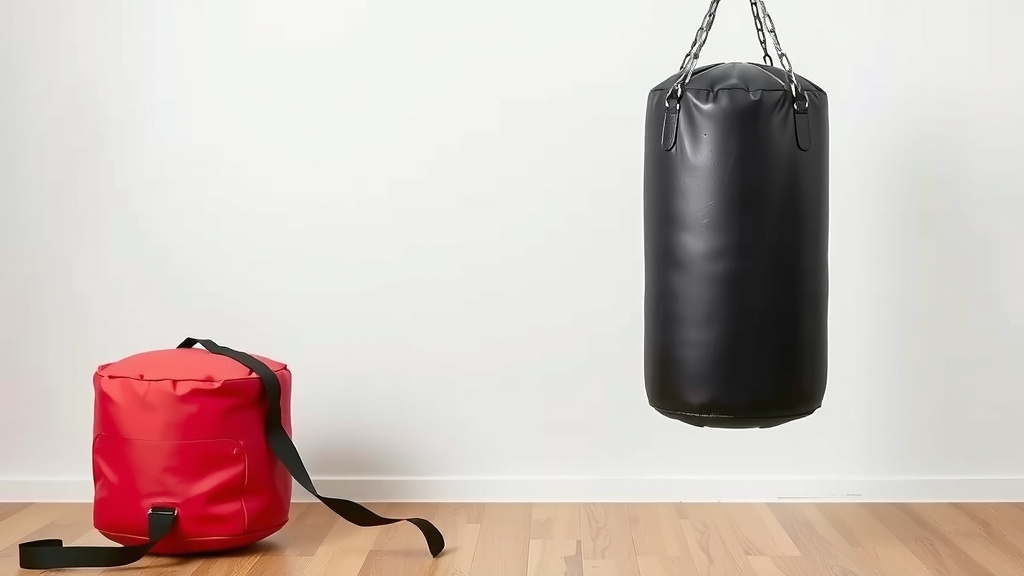
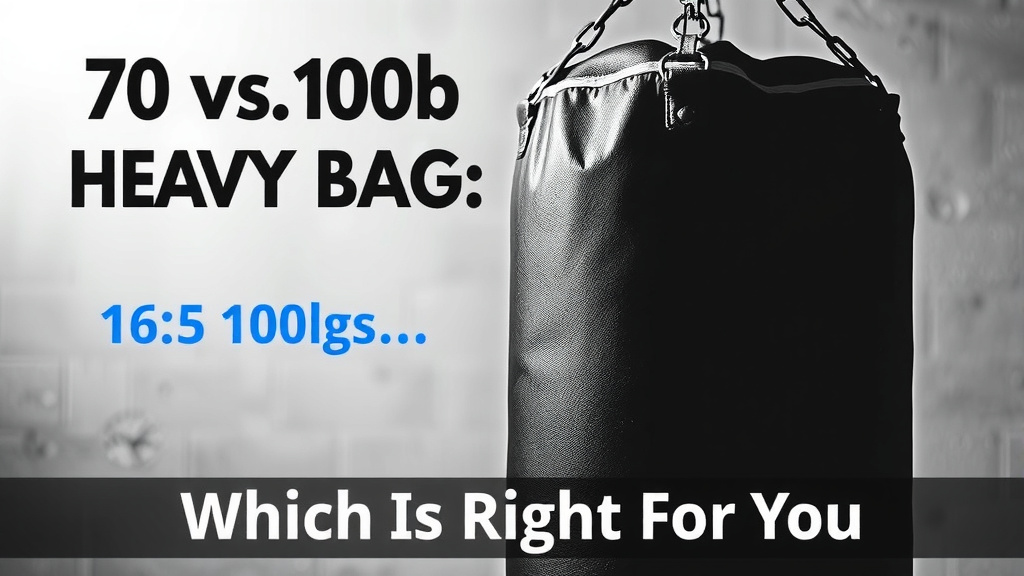
70 lb vs 100 lb Heavy Bag: Which Is Right For You
When choosing between a 70 lb and a 100 lb heavy bag, consider your current strength and training goals. A 70 lb bag is generally better for beginners or those focusing on speed and technique, while a 100 lb bag offers a more challenging workout for power and endurance development. Many fighters find that the 100 lb bag provides a more realistic feel for heavier opponents.
The weight of your heavy bag directly impacts your training experience. A lighter bag allows for quicker combinations and more fluid movement. A heavier bag demands more power and stability, leading to a more intense workout. We found that matching bag weight to your physical attributes and desired outcomes is key for effective training.
- 70 lb bags are great for speed and technique.
- 100 lb bags are ideal for power and endurance.
- Consider your current strength for the best match.
- A heavier bag offers a more realistic feel.
Let’s break down what each weight means for your punches and overall fitness.
Choosing Your Heavy Bag Weight: 70 lb vs. 100 lb
Deciding between a 70 lb and a 100 lb heavy bag really boils down to what you want to get out of your training sessions. Think of it like picking the right tool for the job. A lighter bag is like a nimble sports car, great for quick maneuvers. A heavier bag is more like a sturdy truck, built for serious power and stability.
Understanding the 70 lb Heavy Bag Experience
A 70 lb heavy bag is often recommended for those who are just starting out or who prioritize speed and precision in their strikes. When you hit a lighter bag, it tends to move more readily. This means you can practice throwing fast combinations and focus on your footwork without the bag resisting too much. It’s a fantastic way to build muscle memory for technique.
Benefits for Technique and Speed
With a 70 lb bag, you’ll find that your punches snap back quicker. This quick rebound is essential for developing that rapid-fire punch output you see in many boxing matches. You can string together jabs, crosses, and hooks in rapid succession. This helps you get a feel for timing and rhythm, which are super important for any striking discipline. You’ll also notice it’s easier to keep the bag swinging, allowing you to practice moving around it and countering effectively.
Who Benefits Most from a 70 lb Bag?
Beginners in boxing, Muay Thai, or kickboxing will often find a 70 lb bag to be an excellent starting point. Athletes who focus on agility and striking technique, rather than sheer power, will also love it. If your goal is to improve your hand speed, reaction time, and defensive movements, this weight class is a solid choice. It lets you refine your form without getting overpowered.
Exploring the Power of the 100 lb Heavy Bag
Now, let’s talk about the 100 lb heavy bag. This is where things get a bit more intense. When you swing at a 100 lb bag, it doesn’t move nearly as much as its lighter counterpart. This means you need to put more force behind your punches to make it budge. Research suggests that training with heavier resistance can lead to greater strength and power gains.
Developing Power and Endurance
The 100 lb bag demands a different kind of workout. Because it stays more stable, you’re essentially hitting a solid object with every strike. This is brilliant for building raw punching power. You’ll feel the impact more directly, and your muscles will have to work harder to absorb that force. We found that this resistance also helps build cardiovascular endurance. Throwing powerful punches repeatedly against a heavy bag is a killer workout for your heart and lungs.
A More Realistic Training Partner
Many fighters and coaches agree that a heavier bag offers a more realistic training experience. Think about it: when you spar with an opponent, they don’t just get knocked back by every punch. A 100 lb bag mimics that resistance better. It trains you to generate power from your hips and core, not just your arms. This leads to more effective and impactful strikes in real-world scenarios, whether for sport or self-defense. Many experts say this provides a better simulation of striking a larger, more solid target (National Strength and Conditioning Association).
| Feature | 70 lb Heavy Bag | 100 lb Heavy Bag |
|---|---|---|
| Best For | Speed, Technique, Beginners | Power, Endurance, Advanced Training |
| Movement | Swings readily, quick rebound | Stays more stable, less rebound |
| Impact Feel | Lighter, faster feedback | Heavier, more solid impact |
| Workout Focus | Combinations, footwork, accuracy | Power generation, stamina, conditioning |
| Ideal User | Novices, agility-focused athletes | Intermediate to advanced strikers, power builders |
Factors to Consider Before You Choose
So, how do you pick the right one for your home gym or training space? It’s not just about wanting to hit hard. You need to be realistic about your current physical condition and your long-term goals. Your body will thank you for choosing a bag that’s appropriate for your level.
Your Current Strength Level
Be honest with yourself. If you’re new to hitting heavy bags, or if you’re not accustomed to high-impact training, starting with a 70 lb bag is a smart move. Trying to use a 100 lb bag when you’re not ready could lead to poor form or even injury. We found that many people underestimate the power they need to generate for a heavier bag. It’s always better to build up to it.
Your Training Goals
What do you want to achieve? If you’re aiming to become a faster boxer with lightning-quick combinations, the 70 lb bag is probably your best bet. It allows you to drill those rapid sequences. However, if your aim is to develop knockout power or to build serious stamina for longer rounds, the 100 lb bag will serve you better. It forces you to put more power into every single shot, conditioning your body for serious work.
Space and Mounting Considerations
Don’t forget about the practicalities! A 100 lb bag, filled with sand or dense materials, can be quite heavy. You’ll need a sturdy ceiling mount or a very robust stand that can handle the extra weight and the force of your strikes. Make sure your mounting system is rated for the weight of the bag, plus the dynamic force it will exert when you hit it. Some research indicates that dynamic forces can be several times the static weight (American Society of Mechanical Engineers).
Here’s a quick checklist to help you decide:
- Are you a complete beginner?
- Do you want to focus on speed and accuracy?
- Is your current strength level moderate?
- Do you want to improve fast combinations?
- Is a lighter, more responsive bag appealing?
If you answered ‘yes’ to most of these, a 70 lb bag might be your perfect match. If not, it might be time to consider the 100 lb option.
Conclusion
Choosing between a 70 lb and a 100 lb heavy bag comes down to your personal training objectives and current physical condition. A 70 lb bag is your go-to for building speed and refining technique, perfect for beginners or those focused on quick combinations. The 100 lb bag offers a more demanding workout, excellent for developing raw power and endurance against a stable resistance. We’ve seen that matching the bag’s weight to your goals is key for effective progress. Before you buy, be honest about your strength and ensure your mounting setup can handle the force. Ready to take the next step? Assess your current fitness and desired outcomes, then make the choice that will best fuel your training journey.
Frequently Asked Questions
Can a 70 lb heavy bag really help me build strength?
While a 70 lb bag is primarily designed for speed and technique, you can still build some strength with it. Consistent, powerful strikes will engage your muscles. However, for significant strength and power gains, research suggests a heavier bag like the 100 lb option provides more resistance.
Is a 100 lb heavy bag too heavy for someone under 150 lbs?
Weight is just one factor; your personal strength and experience matter more. If you have a solid foundation in striking and are looking for a challenge, a 100 lb bag can be suitable even if you weigh less than 150 lbs. We found that proper form and conditioning are more important than just body weight.
How often should I train with my heavy bag?
This depends on your overall training program and recovery. For most people, 2-4 sessions per week with a heavy bag is a good starting point. Listen to your body; if you’re experiencing persistent soreness, consider taking extra rest days or reducing session intensity.
Will a heavier bag cause joint pain if I have existing issues?
Potentially, yes. Hitting a heavier bag with improper form can put extra stress on your joints. It’s always wise to consult with a healthcare professional if you have pre-existing joint issues. Focus on mastering technique with a lighter bag first, and ensure you use proper protective gear.
Can I use a 70 lb bag for cardio workouts?
Absolutely! A 70 lb bag is excellent for cardio. You can perform high-intensity interval training (HIIT) with fast combinations, making your heart rate soar. The quick rebound of the lighter bag allows for continuous movement, turning your striking practice into a great cardiovascular workout.
![10 Best Leather Messenger Bag Under $200 [2026]](https://mybestreviewss.com/wp-content/uploads/2026/08/10-best-leather-messenger-bag-under-200-2026-featured-768x432.jpg)
![10 Best Leather Messenger Bags For Work [2026]](https://mybestreviewss.com/wp-content/uploads/2026/09/10-best-leather-messenger-bags-for-work-2026-featured-768x432.jpg)
![10 Best Leather Gym Bags [2026]](https://mybestreviewss.com/wp-content/uploads/2026/09/10-best-leather-gym-bags-2026-featured-768x432.jpg)