
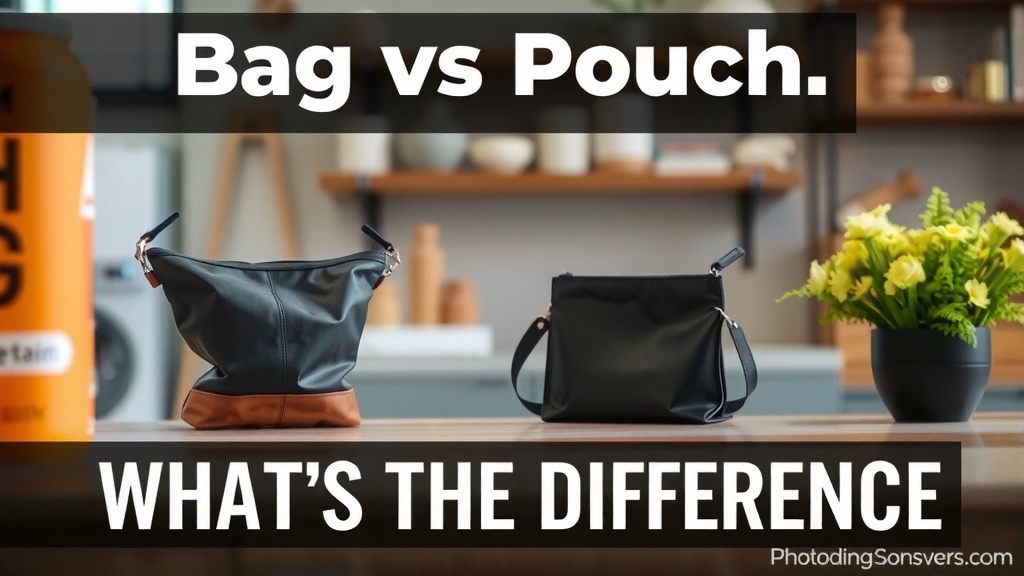
Bag vs Pouch What’s the Difference
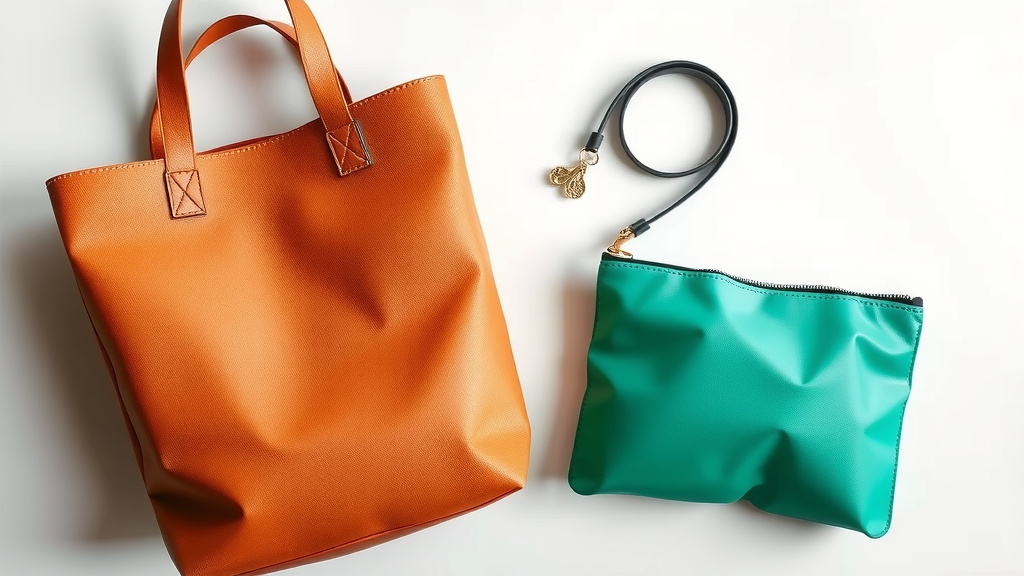
While often used interchangeably, a bag is generally a larger container, while a pouch is a smaller, often flatter one. Think of your everyday handbag – that’s a bag. A small coin purse or a makeup bag inside it? That’s a pouch. The key difference lies in size and purpose.
Understanding this distinction helps you choose the right item for your needs, whether you’re organizing your travel essentials or just carrying your daily necessities. We found that many people struggle with this, leading to confusion when shopping. Both are designed for carrying and organizing things, but their scale matters.
- Bags are typically larger for carrying more items.
- Pouches are smaller for organizing or holding few items.
- Think of a handbag vs. a coin purse.
- The main difference is size and intended use.
Let’s dive into the details and clear up any confusion between bags and pouches, so you can grab the right one every time.
Understanding the Difference: Bag vs. Pouch
When you’re heading out, you grab something to carry your stuff. You might call it a bag, or maybe a pouch. But what’s the real difference? We found that while people often use these terms like they’re the same, there are distinct features that set them apart.
The core distinction really comes down to size and function. Think of it like this: a bag is usually the main container, while a pouch is often a helper inside that bag. Let’s break down what makes each one unique so you can choose wisely.
Defining the “Bag”: More Than Just a Carryall
A bag, in its most general sense, is a flexible container. It’s designed to hold, carry, or store things. You probably have several types of bags in your home right now. They range widely in size, material, and purpose.
Bags for Every Occasion
Consider your everyday needs. You have grocery bags for shopping. You might have a backpack for school or hiking. Then there’s the classic handbag, a staple for many people. Luggage is also a type of bag, for travel.
Everyday Carry Bags
These are the bags you use daily. Think tote bags, messenger bags, or crossbody bags. They’re built to handle more items. Your wallet, phone, keys, maybe a book or a water bottle all fit comfortably. These bags are often made from durable materials like canvas, leather, or nylon.
Specialty Bags
Beyond daily use, specific activities call for specific bags. Gym bags, diaper bags, and laptop bags are common examples. Each is designed with compartments and features for its particular use. For instance, a gym bag might have a separate shoe compartment. A laptop bag offers padded protection for electronics (National Retail Federation).
Key Characteristics of Bags
What makes something a bag? We found several common traits. They typically have a larger volume than pouches. They often feature straps or handles for carrying. Many bags have closures like zippers, buttons, or snaps to keep contents secure. They are the workhorses of personal storage.
Exploring the “Pouch”: The Organized Organizer
Now, let’s talk about pouches. If a bag is the main carrier, a pouch is often a smaller, more specialized container. They are frequently used to keep items organized within a larger bag or to carry just a few essentials.
The Versatile Pouch
Pouches are incredibly useful for decluttering. You can use them to group similar items together. This makes finding what you need much faster. Think about how you might store makeup, toiletries, or cables. A pouch is perfect for this.
Common Types of Pouches
You’ve likely encountered many types of pouches. Coin purses are small pouches for change. Pencil pouches hold writing utensils. Some people use small zippered pouches for travel toiletries or medication. They can also be used for tech accessories like earbuds or charging cords. Even a small drawstring bag can function as a pouch.
Pouches as Organizers
Their primary role is often organization. You might have a designated pouch for your phone charger and battery pack. Another could hold your lip balm, hand sanitizer, and pain relievers. This prevents small items from getting lost in the bottom of your larger bag. Many companies now sell sets of pouches in various sizes for this exact purpose.
Defining Features of Pouches
Pouches tend to be smaller and more compact. Many are relatively flat, even when filled. They might have a simple drawstring, a zipper, or a snap closure. While some can be carried on their own, they often live inside a bigger bag. Their structure can vary from soft and flexible to somewhat structured.
Bag vs. Pouch: A Quick Comparison
To help solidify the differences, let’s look at them side-by-side. The key takeaway is that one isn’t necessarily better than the other; they just serve different roles.
| Feature | Bag | Pouch |
|---|---|---|
| Typical Size | Larger, more voluminous | Smaller, more compact, often flatter |
| Primary Function | Main carrying container | Organization, holding small items |
| Usage Context | Carried on its own or as primary luggage | Often used inside a larger bag |
| Capacity | Holds multiple items, larger objects | Holds a few specific items |
| Examples | Handbag, backpack, tote, suitcase | Coin purse, makeup bag, pencil case, toiletry bag |
When to Choose Which: Practical Tips
So, how do you decide which you need? It really depends on what you’re carrying and how you want to manage your belongings. We found that thinking about the context helps a lot.
Opting for a Bag
You’ll choose a bag when you need to carry a significant number of items. If you’re going grocery shopping, you need a grocery bag. If you’re heading to work or school, a backpack or messenger bag is your go-to. For travel, luggage is essential. These are items meant to be the primary receptacle for your belongings.
Reaching for a Pouch
A pouch shines when organization is key. Do you have a collection of small, loose items that always seem to disappear? A pouch is your solution. It’s perfect for keeping makeup tidy in your purse. It can corral all your charging cables. Using pouches prevents clutter and saves you time searching.
The Synergy Between Bags and Pouches
Often, the best approach involves both! Think of your large tote bag as the main container. Inside that tote, you might have a small pouch for your keys and phone, another for your snacks, and a third for your pens. This system ensures that your larger bag stays organized and accessible. It’s a common strategy for efficient packing (The Container Store).
Making Your Choice: A Checklist
Still unsure? Ask yourself these questions:
- Do I need to carry a lot of items, or just a few?
- Is organization my main goal, or just carrying capacity?
- Will this item be my primary carrier, or will it live inside another container?
- What specific items do I need to store?
- How durable does the container need to be?
- Do I need specialized compartments?
Conclusion
So, you’ve got the rundown on bags and pouches. Remember, a bag is your main carrier, great for holding lots of stuff for work, errands, or travel. Pouches are your organizational wizards, perfect for keeping smaller items tidy within a bigger bag or for quick trips. We found that most people benefit from using both together. Think of your bag as the main stage and your pouches as the organized backstage crew. Next time you pack, take a moment to consider what you need to carry and how you want to find it. Your organized adventures await!
Frequently Asked Questions
Can a pouch be used as a bag?
Yes, a pouch can function as a standalone bag if it’s just for a few essentials. For instance, a small wristlet pouch or a clutch can hold your phone, keys, and a cardholder. However, it won’t have the carrying capacity of a typical bag.
What’s the difference between a tote bag and a pouch?
A tote bag is a large, open-top bag with parallel handles that’s designed to carry many items, like groceries or shopping finds. A pouch is much smaller and often used inside a tote to organize items like makeup or chargers.
Are toiletry bags considered bags or pouches?
Toiletry bags can be a bit of both, depending on their size. A large, structured toiletry bag with multiple compartments might be considered a specialized bag for travel. Smaller, softer pouches used to hold just a few items within a larger bag are definitely pouches.
When should I use a drawstring bag versus a zippered pouch?
A drawstring bag is great for quick access and carrying bulkier or less valuable items, like gym clothes. A zippered pouch offers more security for smaller, important items like coins, medication, or tech accessories, preventing them from falling out.
Do I really need both bags and pouches?
While not strictly necessary, using both can greatly improve your organization and efficiency. Bags provide the main carrying capacity, while pouches prevent smaller items from getting lost. It’s a system that saves you time and frustration.
![10 Best Hanging Wash Bag Leather [2026]](https://mybestreviewss.com/wp-content/uploads/2026/09/10-best-hanging-wash-bag-leather-2026-featured-768x432.jpg)
![10 Best Vegan Leather Diaper Bag [2026]](https://mybestreviewss.com/wp-content/uploads/2026/08/10-best-vegan-leather-diaper-bag-2026-featured-768x432.jpg)
![10 Best Lining For Leather Bags [2026]](https://mybestreviewss.com/wp-content/uploads/2026/08/10-best-lining-for-leather-bags-2026-featured-768x432.jpg)