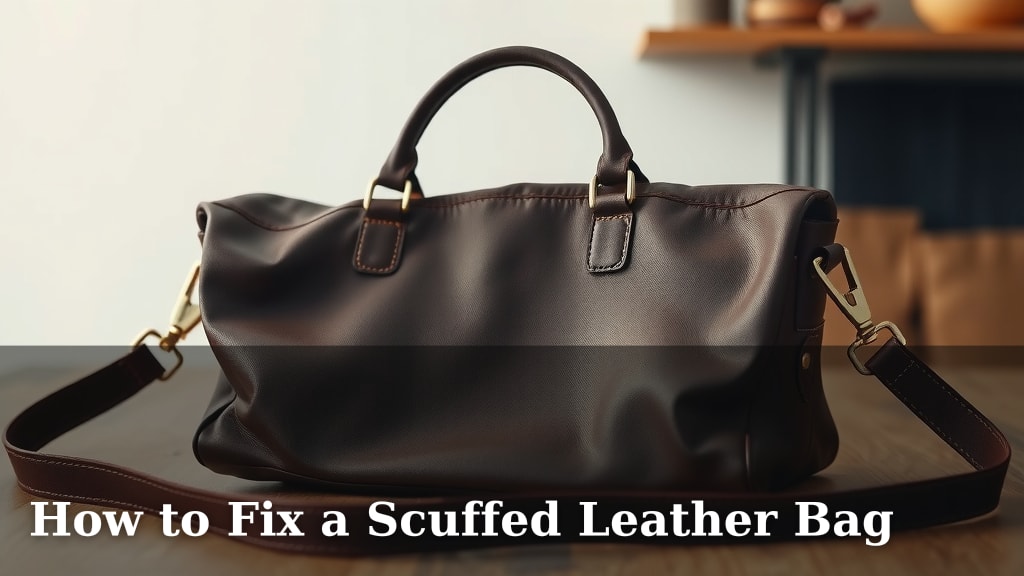
How to Fix a Scuffed Leather Bag
You can often fix scuffed leather bags using simple household items. For minor scuffs, a soft cloth and a bit of leather conditioner can work wonders. For deeper scratches, a color-matched leather repair kit is your best bet. Restoring your bag’s smooth finish is usually quite achievable with the right approach. We found that patience is key for the best results.
Leather bags can get scuffed from everyday wear and tear. A simple bump against a table or an accidental scrape can leave its mark. Fortunately, most leather bag scuffs are preventable and repairable. Understanding your leather type helps determine the best repair method. Many owners have successfully restored their cherished bags with basic care.
- Light scuffs? Try leather conditioner.
- Deeper scratches? Use a leather repair kit.
- Clean the area first.
- Test repair products in an hidden spot.
- Buff gently after applying.
Ready to make those scuffs disappear? Let’s walk through the easiest ways to bring your leather bag back to its former glory.
Restoring Your Leather Bag’s Shine: Tackling Scuffs Like a Pro
Did you notice a new scratch on your favorite leather bag? It happens to the best of us! Life is full of bumps and brushes. Fortunately, fixing a scuffed leather bag is often easier than you think. We found that the key is understanding your leather type and using the right tools. Let’s get your bag looking its best again.
Understanding Your Leather Type Matters
Before you grab any old polish, take a moment to identify your bag’s leather. This is a super important first step. Different leathers react differently to treatments. Knowing your material helps prevent making the scuff worse. It’s like knowing if you’re dealing with silk or denim; they need different care.
Common Leather Types and Their Needs
Most handbags are made from a few popular types of leather. You’ve likely got either finished (protected) leather, aniline, or nubuck/suede. Finished leather is the most common and durable. It has a protective coating, making it more resistant to stains and scuffs. Aniline leather is dyed through without a protective topcoat. It’s soft and natural but stains easily. Nubuck and suede are buffed leathers, giving them a velvety texture. These are the most delicate.
How to Identify Your Leather
Check for a tag inside your bag. Many brands list the material there. If not, look closely at the texture. Finished leather often has a smooth, even surface. Aniline leather might show natural grain variations and feel very soft. Nubuck and suede have a distinct fuzzy or napped finish. You can also try a tiny drop of water in an inconspicuous spot; it will bead up on finished leather but soak into aniline. For nubuck/suede, it will darken quickly.
Easy Fixes for Light Scuffs and Scratches
Got a minor scuff that just looks like a surface mark? Great news! You might not need anything fancy at all. Many times, a gentle approach is all it takes. We found that patience and a light touch are your best friends here.
The Power of Leather Conditioner
Leather conditioner is a miracle worker for light scuffs. It moisturizes the leather, which can help blend minor abrasions. Think of it like moisturizing dry skin; it smooths things out. This works best on finished leather.
How to use it:
- First, clean the scuffed area gently with a dry, soft cloth.
- Apply a small amount of leather conditioner to a separate clean, soft cloth.
- Rub the conditioner into the scuffed area in a circular motion.
- Let it sit for a few minutes to absorb.
- Buff the area with another clean cloth until it shines.
We found this method often makes light scratches disappear like magic.
DIY Solutions: Olive Oil or Petroleum Jelly (Use with Caution!)
For very minor scuffs on darker, finished leather, some people have success with household items. A tiny dab of olive oil or petroleum jelly can sometimes help fill in and darken the scratch. However, we strongly recommend testing this in a hidden spot first. These can alter the color of your leather.
Important Considerations
Olive oil and petroleum jelly can leave a greasy residue. They might also darken the leather permanently. This is why a patch test is non-negotiable. Always use these sparingly. A little goes a very long way. Many experts suggest sticking to dedicated leather products if you’re unsure (Mayo Clinic).
Tackling Deeper Scratches and Scuffs
What about those scuffs that have actually broken the surface of the leather? Don’t despair! These require a slightly more robust approach. We found that a quality leather repair kit is usually the most effective solution for deeper damage.
Choosing the Right Leather Repair Kit
Leather repair kits come in various forms. Most include a filler compound and colorants. Some are designed for specific leather types. Always choose a kit that matches your bag’s color as closely as possible. Many kits offer a color-mixing guide, which is very helpful. Read reviews to find a kit known for good results.
Step-by-Step Repair Process
Repairing deeper scuffs involves a few more steps. It’s like a mini restoration project for your bag. Following instructions carefully is key for a smooth finish.
- Clean the area thoroughly: Use a leather cleaner to remove any dirt or oils. Let it dry completely.
- Apply the filler: Use a small spatula or applicator tool to apply the filler compound into the scratch. Smooth it down so it’s level with the leather surface. Allow it to dry according to the kit’s instructions. This might take several hours or overnight.
- Color matching: If your kit includes colorants, mix them to match your bag’s shade. Test the color on a hidden area or a piece of paper first.
- Apply the color: Use a sponge or cloth to apply the colorant over the repaired area. Work in thin layers, allowing each layer to dry. Blend the edges carefully.
- Sealing and buffing: Once the color is dry, apply a leather sealant or topcoat if included. This protects the repair. After it dries, gently buff the area with a soft cloth.
This process takes time, but the results can be incredibly rewarding. We found that patience during the drying stages really improves the final look.
Special Care for Suede and Nubuck Bags
Suede and nubuck require a different touch. These leathers are more delicate and don’t respond well to conditioners or fillers meant for smooth leather. Harsh chemicals can permanently damage them.
Using a Suede Brush and Eraser
For scuffs on suede or nubuck, start with a specialized suede brush. Brush the affected area gently in one direction. This often lifts minor scuffs and restores the nap. For slightly more stubborn marks, a suede eraser can be very effective. Rub the eraser over the scuff mark gently.
When to Seek Professional Help
If you have a very expensive bag or a particularly deep or extensive scuff, consider professional help. A professional leather cleaner and restorer has the expertise and tools for difficult jobs. We found that for sentimental items, this is sometimes the wisest choice.
A Quick Checklist for Your Scuff Repair Journey
Ready to tackle those scuffs? Keep this handy list to guide you:
- Identify your leather type first.
- Clean the area thoroughly before any treatment.
- Test products in an inconspicuous spot.
- Use gentle, circular motions when applying products.
- Allow ample drying time between steps.
- Buff gently to restore shine.
Conclusion
You’ve learned that fixing a scuffed leather bag is often within your reach. By identifying your leather type and using the right approach, you can restore its beauty. For minor scuffs, a good leather conditioner can work wonders. Deeper scratches might require a leather repair kit for a more robust fix. Remember to always test products first and work gently. You have the power to bring your beloved bag back to life!
Now, go ahead and give your bag the care it deserves. You’ll be amazed at the results you can achieve!
Frequently Asked Questions
Can I really fix a scuffed leather bag myself?
Yes, you absolutely can! For most common scuffs and scratches, especially on finished leather, DIY methods are very effective. You can often use items like leather conditioner or a color-matched repair kit to restore the finish.
What’s the best way to clean a scuffed area before repairing it?
Always start by cleaning the scuffed area gently with a soft, dry cloth to remove surface dust. If more is needed, use a dedicated leather cleaner. Ensure the area is completely dry before applying any repair product.
How do I know if I have finished leather or a more delicate type?
Check for a tag inside your bag or examine the texture. Finished leather is typically smooth and has a protective coating. Aniline leather is softer and shows natural markings, while suede/nubuck has a fuzzy texture. When in doubt, test a tiny bit of water in a hidden spot; it beads on finished leather but soaks into aniline.
What if the scuff is on a colored leather bag?
For colored leather, using a color-matched leather repair kit is essential for deeper scuffs. If you’re using a conditioner or a DIY method like olive oil, always test it in an inconspicuous area first. This prevents uneven darkening or color changes.
When should I consider taking my bag to a professional?
If your bag is very expensive, made of a delicate material like exotic leather, or if the scuff is very deep and extensive, professional help is often best. A professional has specialized tools and knowledge to avoid further damage.

![10 Best Vegan Leather Belt Bag [2026]](https://mybestreviewss.com/wp-content/uploads/2026/08/10-best-vegan-leather-belt-bag-2026-featured-768x432.jpg)